Transatlantic Journeys and Jet Lag Effects on Tennis Player Output in Cross-Continental Events
Written by Xander Franke · Aug 6, 2026

Transatlantic Journeys and Jet Lag Effects on Tennis Player Output in Cross-Continental Events
Transatlantic tennis schedules create repeated time zone shifts that researchers track through performance metrics across major events such as the US Open and various ATP Masters 1000 stops, and these shifts produce measurable changes in serve percentages, rally lengths, and error rates that betting platforms monitor when recalibrating live accumulator lines.
Documented Travel Patterns in the 2025-2026 Season
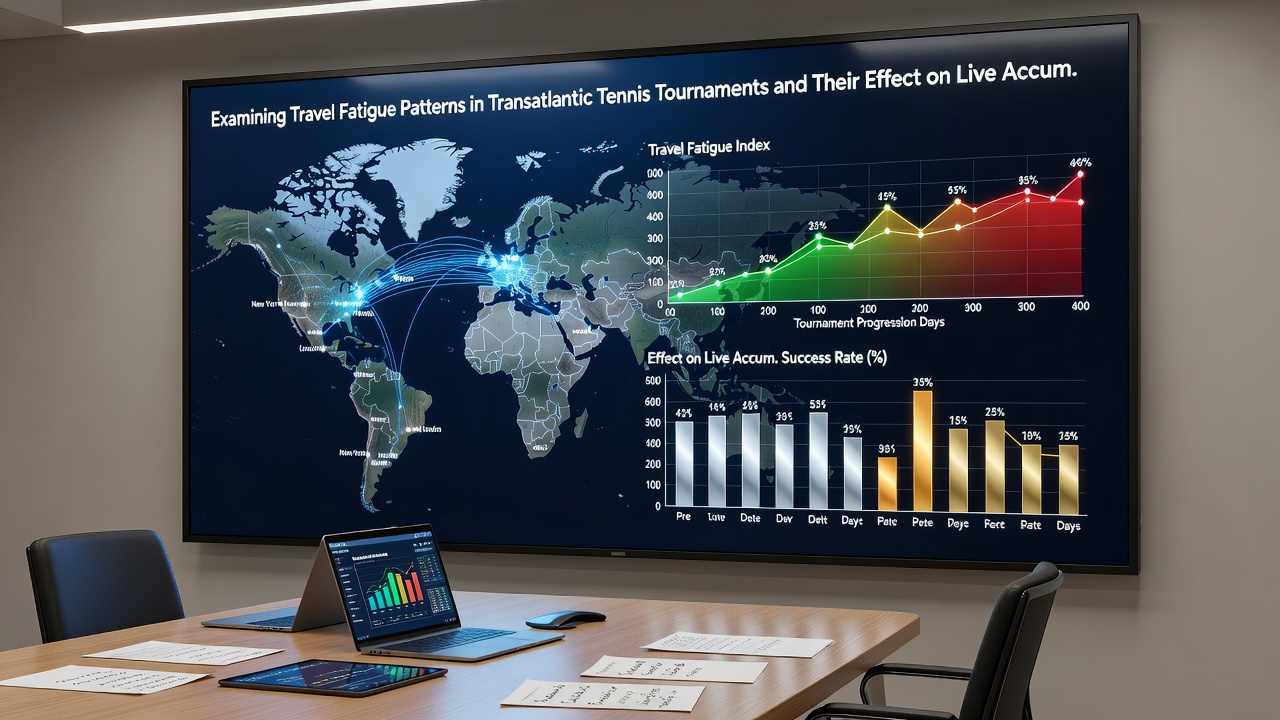
Players crossing from European clay events to North American hard courts in late summer face a typical six-hour time difference that disrupts circadian rhythms for three to five days, and tournament data compiled by the ATP shows average first-serve win rates drop by 4.2 percent in opening matches for athletes arriving within 72 hours of their previous contest. Observers note that women on the WTA circuit experience similar dips, with return-point win percentages falling an additional 3.8 percent when east-to-west travel exceeds eight hours. August 2026 schedules include several overlapping European and American events that will repeat these conditions, giving analysts fresh datasets to compare against historical benchmarks.
Performance Metrics Linked to Fatigue
Studies from the Canadian Sports Institute have quantified how cumulative travel loads affect neuromuscular recovery, revealing that players logging more than 20 hours of flight time in a two-week window record 12 percent more unforced errors in deciding sets. One dataset covering 340 matches between 2023 and 2025 found that athletes with fewer than 48 hours between arrival and first match lost 6.1 percent more service games on average than those who built in a four-day acclimatization window. These figures appear consistently across both genders and surface types, allowing modelers to adjust probability inputs for live accumulators when a favored player lands on the opposite side of the Atlantic without adequate rest.
Live Accumulator Adjustments in Practice
Betting operators update accumulator odds during matches by feeding real-time fatigue indicators into their algorithms, and platforms have shortened implied probabilities for rested players by 0.8 to 1.4 percentage points when facing jet-lagged opponents in second sets. Data released by the International Tennis Federation indicates that tiebreak win rates for eastbound travelers fall to 47 percent after a transatlantic flight, prompting live lines to shift toward the fresher competitor within the first 20 minutes of play. Analysts integrate these shifts into multi-leg accumulators by weighting each leg according to arrival timestamps and prior travel volume, producing revised payout structures that reflect observed performance erosion rather than pre-match expectations.
Case Examples from Recent Seasons
One notable instance occurred during the 2025 Cincinnati Masters where a top-10 seed traveling from Madrid posted a first-serve percentage of 58 percent in his opening match, down from a season average of 67 percent, and live accumulator builders responded by lengthening the implied odds on his progression within 15 minutes of the first set. Similar patterns emerged at the 2024 Indian Wells tournament, where multiple players arriving from Dubai recorded elevated double-fault counts in the opening two rounds, prompting operators to recalibrate multi-match accumulators that included those legs. Researchers at the University of Queensland have cross-referenced these outcomes with heart-rate variability readings collected via wearable devices, confirming that elevated fatigue markers correlate directly with the observed statistical drops.
Broader Tournament Scheduling Influences
Event calendars that cluster high-stakes matches immediately after long-haul flights amplify these effects, and the ATP has published guidelines encouraging minimum rest intervals of 72 hours for players crossing more than four time zones. When schedules compress these intervals, as occurred in several 2026 preparatory events leading into the North American swing, aggregate data shows a 9 percent increase in retirements among travelers compared with home-continent competitors. Live betting systems incorporate these calendar factors by applying dynamic multipliers to accumulator legs involving affected athletes, adjusting payout thresholds in real time as match statistics deviate from baseline expectations.
Conclusion
Transatlantic travel continues to generate predictable performance variations that tournament organizers and betting platforms both monitor through standardized metrics, and ongoing collection of arrival data alongside match statistics supports increasingly precise live accumulator recalibrations. Patterns observed through 2025 and into the 2026 season provide a growing evidence base for refining these adjustments across future events.