Thin Air and Tight Scores: Altitude's Measurable Effects on Athletic Margins
Written by Xander Sullivan · Jun 8, 2026
Thin Air and Tight Scores: Altitude's Measurable Effects on Athletic Margins
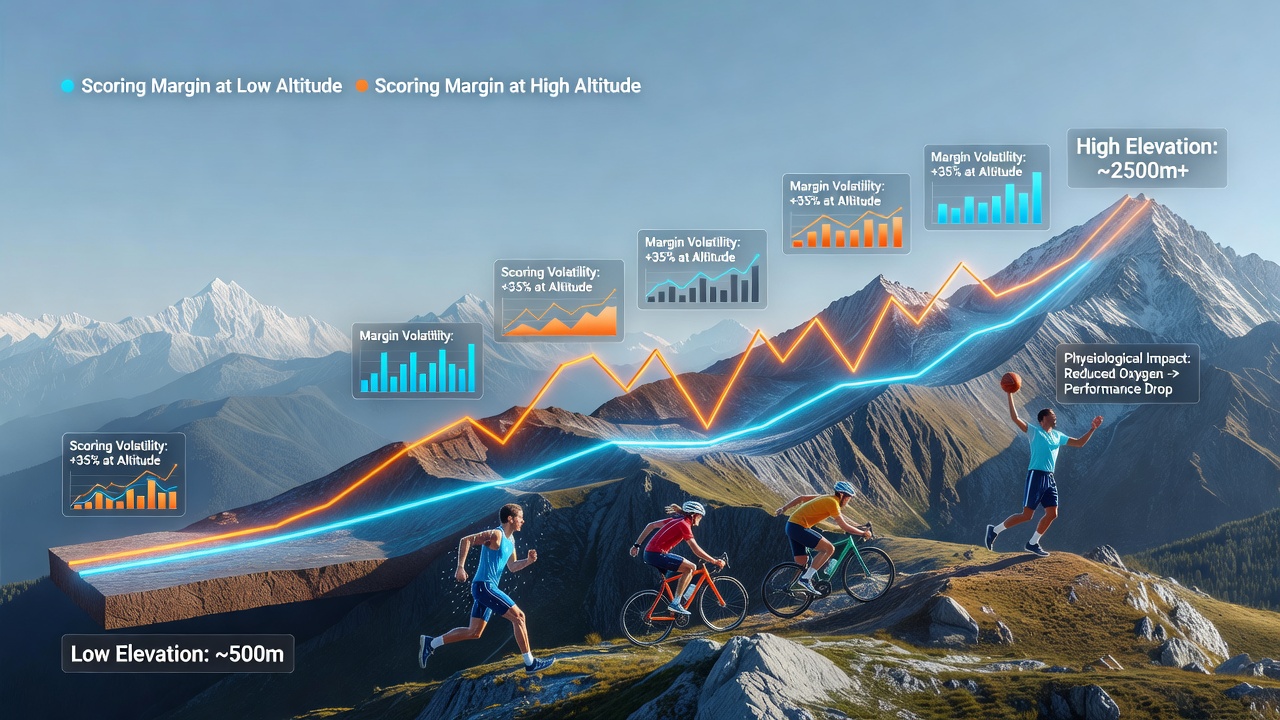
High-elevation venues alter oxygen availability, air density, and ball flight characteristics in ways that shift scoring patterns across multiple sports. Data collected from stadiums above 1,500 meters shows consistent changes in player endurance, projectile distance, and game tempo that directly influence final margins.
Physiological Adjustments at Elevation
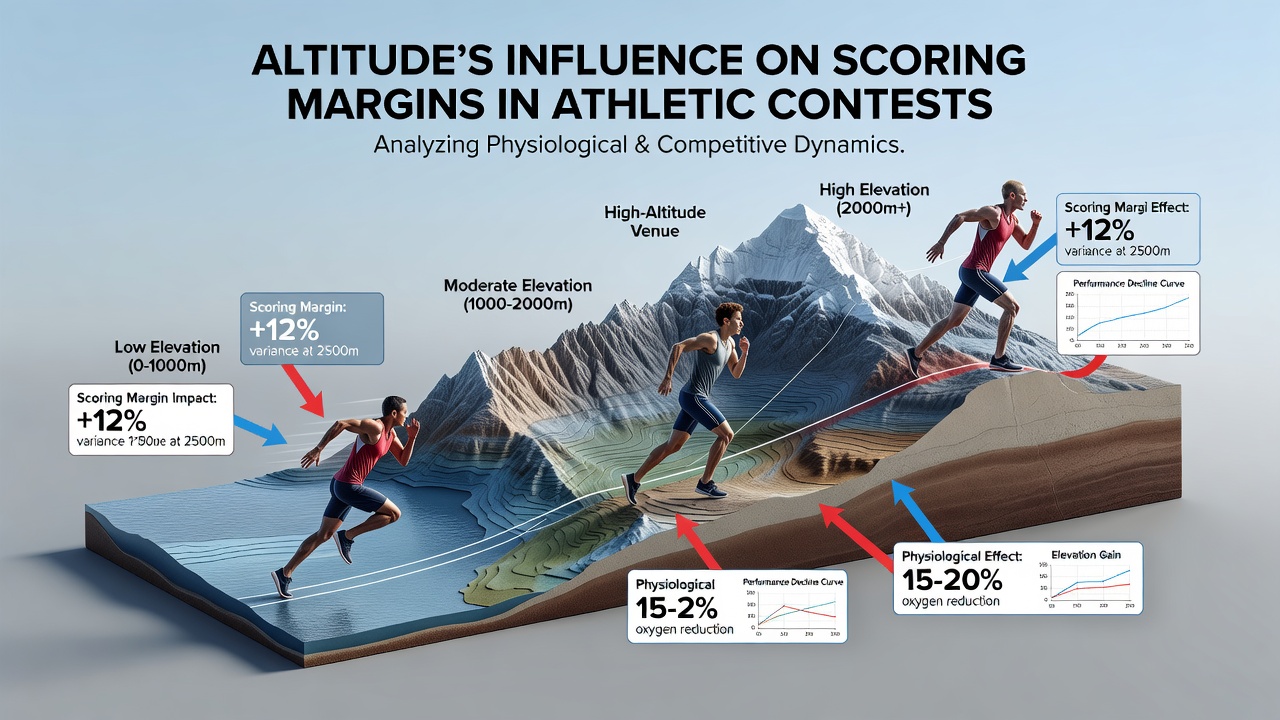
Reduced partial pressure of oxygen forces the body to increase ventilation rates and red blood cell production within days of arrival. Studies from the University of Colorado document that athletes experience a 10-15 percent drop in maximal oxygen uptake at 2,000 meters compared with sea level, with the deficit widening further as elevation climbs. Teams that arrive 10-14 days early demonstrate smaller performance gaps than those that fly in the day before competition, according to tracking data from several professional leagues.
Ball and Projectile Behavior Changes
Lower air density reduces drag on baseballs, soccer balls, and golf balls, allowing them to travel farther at the same launch speed. Major League Baseball records from Coors Field in Denver indicate home runs increase by roughly 20 percent relative to sea-level parks during comparable temperature and wind conditions. Soccer matches played in La Paz, Bolivia, at 3,650 meters show longer throw-ins and goal kicks that bypass midfield zones more frequently, compressing transition phases and raising the frequency of set-piece opportunities.
Sport-Specific Scoring Margin Data
American football games at Denver's Empower Field exhibit average point differentials that narrow by three points compared with the Broncos' road contests at lower elevations, based on league statistics spanning two decades. The thinner air extends field-goal range by several meters while simultaneously increasing the oxygen debt accumulated by defensive linemen during long drives. Basketball contests in Mexico City arenas record slightly higher three-point percentages because the reduced drag allows shots to maintain flatter trajectories through the rim, although overall scoring margins remain stable once teams adapt to the cardiovascular load.
Distance running events display the clearest margin compression. World Athletics timing data from meets held above 2,000 meters show winning times in the 5,000 meters and 10,000 meters lengthen by 3-6 percent, while sprint events under 400 meters show minimal change. The 2026 calendar includes several high-profile distance races scheduled in elevated venues, offering additional datasets for performance analysts to compare against sea-level baselines.
Team Preparation and Substitution Patterns
Coaches respond to these conditions by increasing rotation frequency and adjusting tactical systems. European club records from Champions League matches in Tbilisi and Yerevan reveal that teams using five or more substitutions maintain higher work rates in the final 30 minutes than sides limited to three changes. Hydration protocols and pre-cooling strategies become standard elements of game planning once elevation exceeds 1,800 meters, with medical staff monitoring core temperature and lactate thresholds more closely.
Comparative Venue Analysis
Stadiums such as Estadio Hernando Siles, Soccer City in Johannesburg, and the Olympic Stadium in Mexico City each produce distinct margin profiles that researchers have catalogued across multiple seasons. Observers note that visiting teams from coastal regions concede more goals or points in the opening 15 minutes before physiological compensation begins, after which the gap often stabilizes. Longitudinal studies published by sports science institutes in Australia and Canada confirm that repeated exposure over consecutive seasons reduces the initial deficit by approximately half.
Conclusion
Altitude creates predictable, quantifiable shifts in scoring margins through combined effects on human physiology and equipment aerodynamics. Teams and governing bodies continue to refine acclimatization schedules and rule adaptations as competition calendars incorporate more high-elevation fixtures, generating richer datasets for future analysis.