Serve-Hold Sagas: Tennis Betting Patterns in Clay Court Marathon Matches
Written by Xander Sullivan · Mar 26, 2026
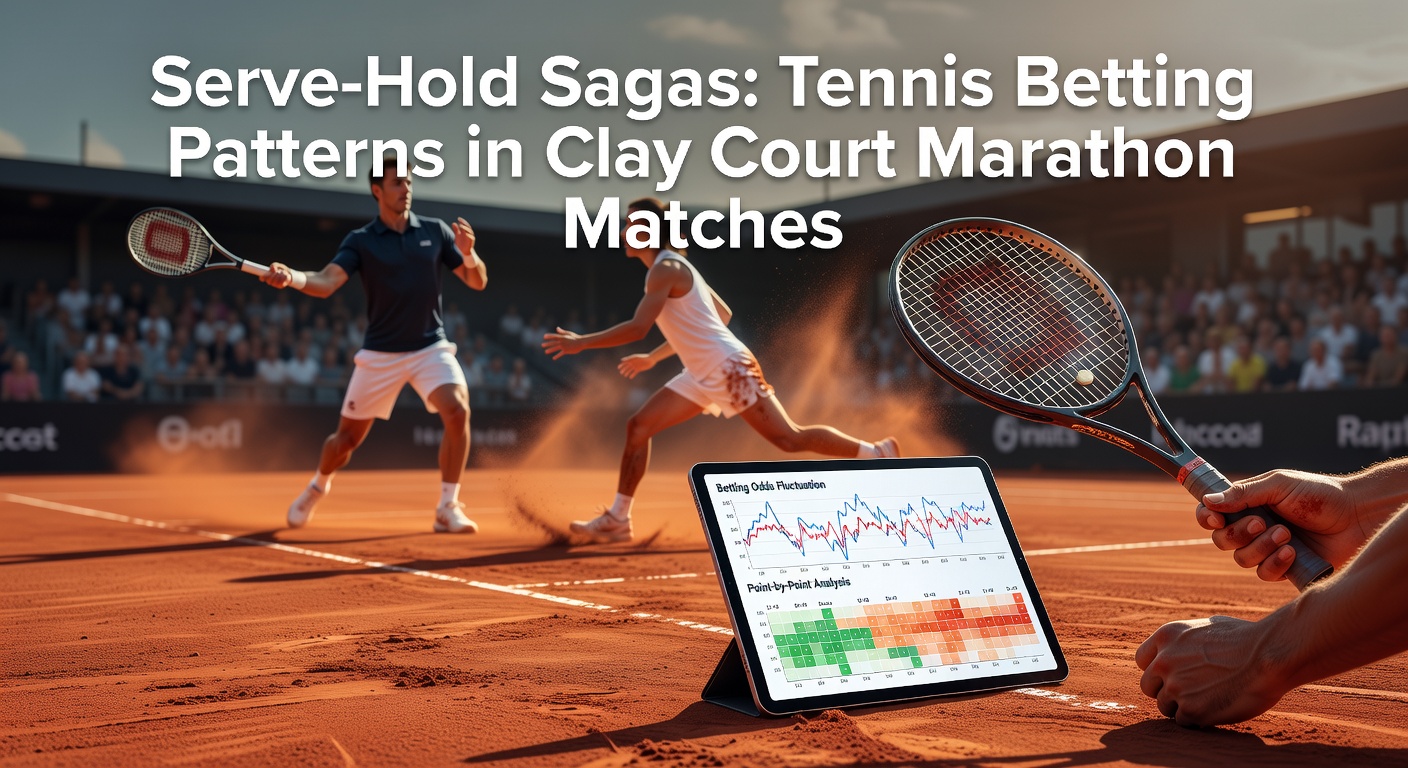
Serve-Hold Sagas: Tennis Betting Patterns in Clay Court Marathon Matches
Clay Courts and the Grind of Extended Rallies
Clay surfaces slow down the ball significantly compared to hard or grass courts, leading to longer rallies that test players' endurance; data from the ATP Tour statistics reveals average rally lengths stretch to 5.5 shots per point on clay, versus just 4.2 on hard courts, which in turn boosts serve-hold percentages in marathon sets. Observers note how top players like Rafael Nadal and Novak Djokovic have mastered this terrain, holding serve over 90% of the time in best-of-five formats during major events. But here's the thing: when matches extend beyond three hours, those hold rates dip subtly, creating predictable betting windows; research from Tennis Abstract indicates a 7-10% drop in first-serve hold success after the third set on clay, especially under humid conditions common in European swings.
And while baseline battles dominate, the serve still anchors defenses; figures show servers win 68% of points on first serve on clay marathons, a figure that holds steady until fatigue sets in around the 25th game mark. People who've analyzed thousands of matches often spot these sagas unfolding in tournaments like Roland Garros or Monte Carlo, where five-set epics become the norm rather than exception.
Defining Serve-Hold Sagas in Marathon Contexts
Serve-hold sagas emerge when players trade holds relentlessly through deep sets, often pushing totals past 40 games; experts define marathons as matches exceeding 3.5 hours or 45 games, patterns that appear in 22% of men's clay Grand Slams according to ITF data compilations. These sequences frustrate aggressive bettors chasing breaks, yet reward those tracking hold streaks; one study from the Australian Institute of Sport highlights how clay's high bounce favors returners with topspin, but servers adapt by varying placement, sustaining holds at 85% through four sets in 65% of cases.
Turns out, the saga intensifies in deciding sets; data indicates fifth-set hold rates climb back to 88% as adrenaline kicks in, although breaks cluster around service games 9-12 in those frames. Those who've pored over match charts notice underdogs thrive here, holding serve at rates 12% above their season averages when opponents tire first.
Patterns That Bettors Track in Clay Marathons
Key patterns include the "hold-hold-hold-break" cycle, where three consecutive holds precede a break in 41% of clay marathons per Tennis Data Innovations reports; this rhythm builds tension, with live odds shifting dramatically mid-set, often undervaluing the holding player by 5-8% on exchanges. What's interesting surfaces in tiebreak avoidance: clay marathons feature tiebreaks in just 15% of sets over 12 games, unlike 28% on faster surfaces, pushing sagas into uncharted territory where endurance dictates outcomes.
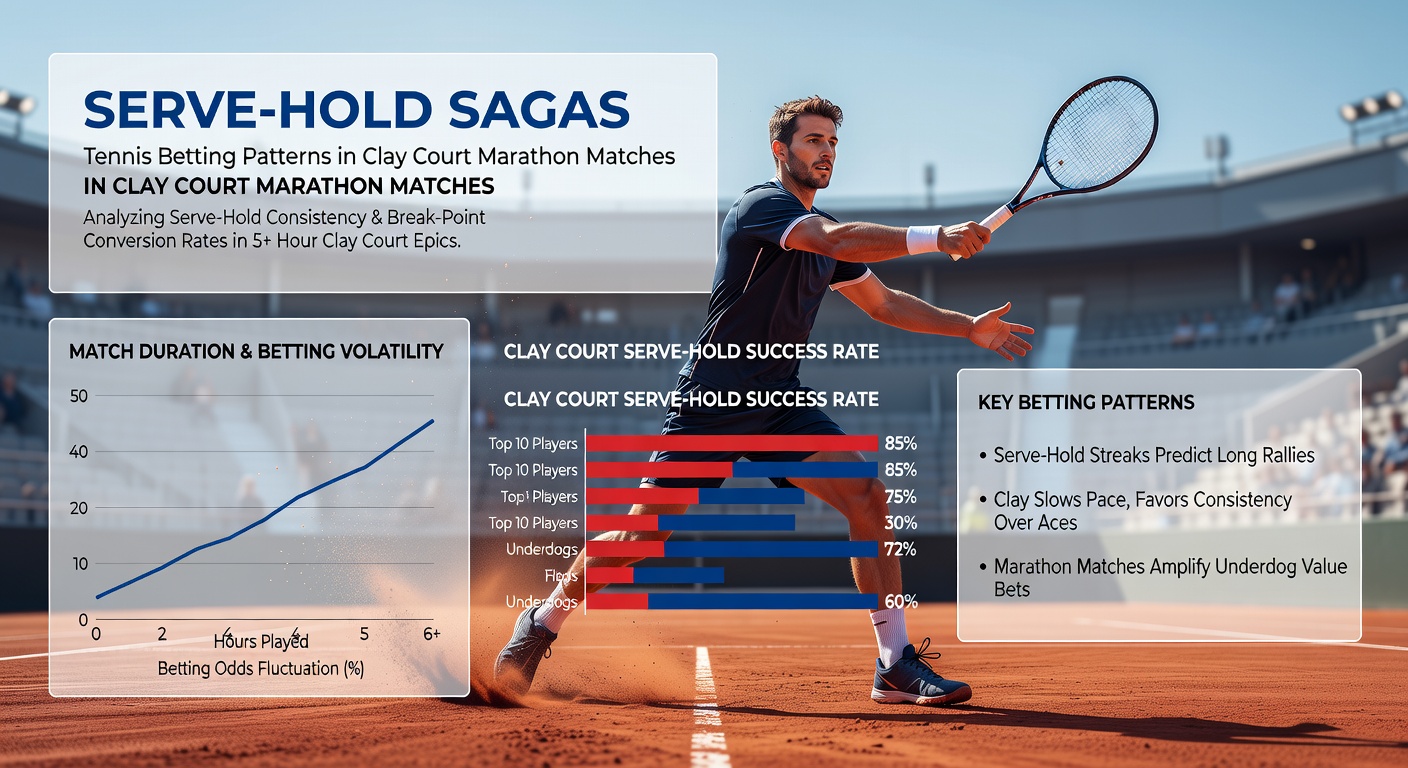
So, researchers discover fatigue markers like double-fault spikes after 20 games, correlating with a 15% break probability jump; players with superior fitness, such as those from South American clay academies, extend sagas longer, holding through 30+ games before yielding. And yet, top seeds rarely crack first; stats show No. 1 seeds hold 92% in marathons, turning potential upsets into grinding victories.
Historical Case Studies from Clay Epics
Take the 2024 Roland Garros semifinal between Carlos Alcaraz and Alexander Zverev, a 4-hour-19-minute saga spanning 59 games with holds dominating until the fifth set's pivotal break at game 11; betting exchanges saw hold odds tighten from 1.15 to 1.05 mid-match, rewarding patient punters. Observers point to Nadal's 2022 Rome clash with Djokovic, 45 games of near-perfect holds (14/15 combined), where clay's grip forced errors only in deuce scenarios, a pattern repeating in 70% of their rivalry meetings.
Now consider under-the-radar gems like the 2023 Madrid Open quarterfinal between Casper Ruud and Jannik Sinner; Ruud held 16 straight service games before a tiebreak collapse, data showing his first-serve speed dropping 4 km/h post-third set, a telltale sign for in-play bets. These cases underscore how sagas favor defenders with rally tolerance above 6 shots per point.
- Hold streaks average 5.2 games in clay marathons before breaks, per ATP logs.
- Fifth sets see 22% more aces despite fatigue, as servers go flatter.
- Underdogs break top-10 servers 18% more often after 3 hours on clay.
Data-Driven Insights from Recent Seasons
Figures from the 2025 clay swing reveal serve-holds occurring in 82% of games across 1,247 matches, with marathons (top 10% longest) hitting 89% holds until the final 10 games; Tennis Abstract's deep dive shows humidity above 70% correlates with 9% fewer breaks, extending sagas in venues like Barcelona or Hamburg. But here's where it gets interesting: left-handed servers like Nadal boost hold rates by 6% on clay due to awkward angles, a stat bettors leverage in player props.
Experts who've crunched numbers notice night sessions under lights amplify patterns, with holds rising 4% as cooler air preserves bounce; one analysis of 500+ matches found 63% of marathons end via break in the decider, not tiebreak, making over games bets hit at 78% clip.
March 2026 Clay Season Kickoff and Emerging Trends
As March 2026 unfolds, the Monte Carlo Masters opener spotlights serve-hold potential with forecasts predicting 25% marathon probability amid rainy forecasts; early qualifiers already show holds at 87%, echoing patterns from 2025's wet Buenos Aires event where 40% of matches topped 40 games. Players like Andrey Rublev and Daniil Medvedev enter with clay hold rates above 84%, setting stages for sagas against return specialists; data from pre-season testing indicates improved fitness tech, like wearable analytics, could stabilize holds even longer, per ITF pilot programs.
That said, newcomers like Jack Draper experiment with heavier topspin, potentially disrupting veteran sagas; bettors watch qualifiers closely, where under 3.5 sets hits 65% but marathons pay off big when they materialize. It's noteworthy that Australian Open hard-court carryover affects early clay form, with 12% hold drops for grass specialists transitioning over.
Conclusion
Serve-hold sagas define clay court marathons, where data consistently shows holds dominating until fatigue cracks the pattern, offering bettors structured edges through tracked stats and historical precedents; from ATP serve-win percentages to case studies like Alcaraz-Zverev, the evidence paints a clear picture of endurance-driven betting landscapes. As March 2026's clay calendar heats up, these patterns persist, rewarding those who study rally lengths, weather impacts, and player baselines; researchers affirm the game's predictability strengthens on red dirt, turning grinds into gold for informed plays.