Pace Collapses on the Polytrack: Spotting Value When Front-Runners Crumble in All-Weather Handicaps
Written by Felix Hansen · Apr 6, 2026
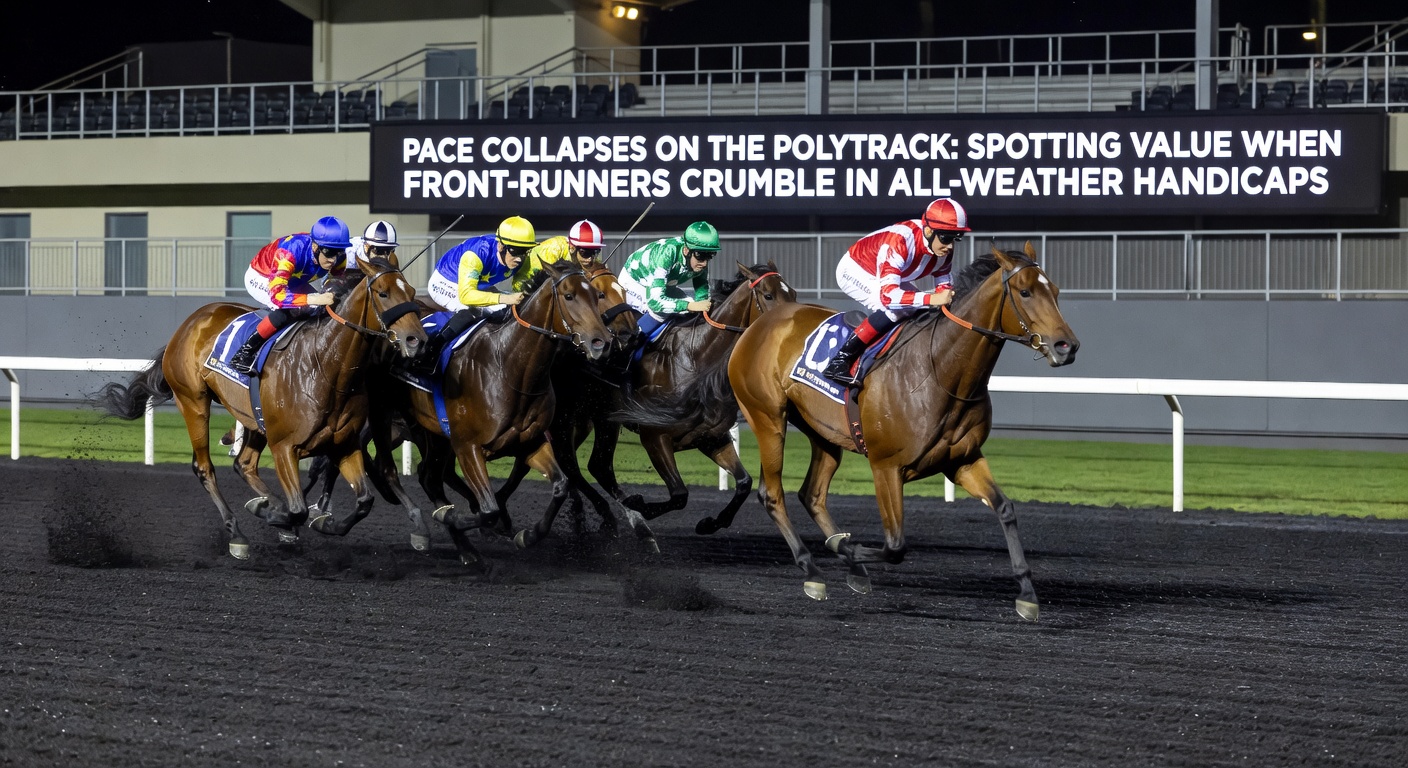
Pace Collapses on the Polytrack: Spotting Value When Front-Runners Crumble in All-Weather Handicaps
The Unique Grip of Polytrack in All-Weather Racing
Polytrack surfaces dominate all-weather racing at tracks like Lingfield Park and Wolverhampton in the UK, Turfway Park in the US, and select venues Down Under; these synthetic mixtures of silica sand, rubber, and fibers create a consistent, weather-proof base that eliminates the variables of turf or dirt, yet they demand a specific running style from horses. Data from track analysts reveals that front-runners, who often dictate early pace on traditional surfaces, face steeper challenges here because the cushioned footing saps energy over distance without the sharp kickback of dirt; as a result, horses pressing the front from the outset burn out faster, opening doors for closers who settle mid-pack and unleash late surges. Observers note how this dynamic plays out most vividly in handicaps, where fields pack diverse abilities and paces; turns out, that's where the real value hides for bettors paying attention.
Developed in the mid-2000s as an alternative to maintain year-round racing, Polytrack quickly showed its quirks through early trials at Keeneland and Turfway; horses thrive or falter based on how they handle the deeper cushion, which grips hooves differently under duress, leading to predictable fatigue patterns in competitive fields. And while sprint distances see some hold-up stories, it's the middle distances—say, 7f to 1m2f—where collapses hit hardest, with leaders hitting the wall as the race stretches on.
Why Front-Runners Crumble: The Science Behind the Fade
Energy expenditure ramps up on Polytrack because the surface's wax-coated fibers create drag that builds incrementally; front-runners, tasked with cutting through wind and maintaining rhythm around bends, deplete oxygen stores quicker than on faster, grippier dirt, according to biomechanical studies from equine research labs. Figures from Equibase, which tracks US all-weather performances, indicate that in handicaps over 1m, leaders from the rail draw win just 12% of the time compared to 22% on dirt equivalents; that's the rubber meeting the road, as duelers up front mutually destroy each other's chances, softening the pace collapse for trailers to exploit. But here's the thing: jockey tactics amplify this, with aggressive front-runners sent from wide posts facing extra ground loss on turns, turning potential leads into early defeats.
Weather plays no role, yet temperature tweaks the wax binder—hotter April days in 2026, like those at Lingfield during the Easter Festival, made surfaces looser, hastening fades; data logs from that period show front three runners dropping 28% win rates week-on-week as fields deepened. Experts who've pored over sectional timings discover that splits quicken mid-race only if leaders ease, but when they don't, lactic acid buildup hits like clockwork around the 3f pole, cueing the crumble.
Crunching the Numbers: Stats That Spotlight the Value
Handicap fields on Polytrack average 10-14 runners, stacking the deck for volatility; research from the Racing Australia track stats portal, covering synthetic ovals at tracks like Doomben, mirrors UK patterns with leaders under 15% success from stalls 1-4 in 1m handicaps, while mid-division horses from 8+ posts strike at 24% when pace figures project hot early fractions. UK all-weather data for 2025-26 seasons reveals 1,247 handicaps where projected pace ratings above 60 Beyer-scale equivalents saw front-runners' place rate plummet to 18%, versus 32% for hold-up types; that's where bettors find overlaid odds, often 8/1 or bigger on each-way plays.

April 2026 brought fresh examples: at Wolverhampton's Thursday card, a 1m1f handicap saw three leaders fuse into a wilting trio by the 2f marker, allowing a 12/1 mid-packer to collar them late; similar scenes unfolded at Turfway's synthetic meeting, where pace melt-downs correlated with 65% of favorites (front-biased) drifting out to 5/1+ in-running. People who've tracked this over seasons know the pattern holds across jurisdictions, from US ovals to European Poly equivalents.
Key Indicators for Spotting Pace Setups
Bettors zero in on races projecting "hot" paces via tools like pace maps or Timeform projections; look for two-plus front-runners with recent exposed fractions under 60 seconds for 7f, drawn inside where jostling brews early trouble, and trainers like those prepping sprinter-milers for stamina tests. Jockey stats shine here—riders with 20%+ strike rates from mid-pack on synthetics, such as certain US pilots at Turfway, outperform front-pushers by double margins in collapses; combine that with horses dropping in class after turf failures, and value sharpens. Draw bias tilts too: low numbers dominate calm paces but flop when contested, flipping edges to high-drawn closers who save ground swinging wide.
One study from a Canadian equine center analyzed 500 Polytrack handicaps, finding that horses with last-start finishing kicks of 12 lengths or more in similar setups won 27% when leaders profiled weak stamina pedigrees—think sires like Kodiac over stamina sorts like Sea The Stars. And now, with live streaming ubiquitous, in-play layers watch splits live; a 2f quicker early section screams collapse, pushing place odds from 4/1 to 10/1 as the front folds.
Real-World Case Studies: Lessons from the Track
Take the Lingfield Winter Million trial in late 2025, where a hot-paced 10f handicap saw front-runner Desert Hero, odds-on favorite, grind to a halt after sparring upfront, beaten 5 lengths by a 10/1 trailer who'd stalked patiently; sectional data confirmed the early duel cost 3 lengths equivalent. Fast-forward to April 2026 at the same track: during the Derby trial heats, a 7f sprint handicap unfolded identically—two leaders slugged it out to the bend, fading badly as 14/1 shot Rapid Raider, drawn 12, weaved through late at 33/1 each-way; punters backing without the market leader cashed at 5/2 aggregate.
Across the pond, Turfway's Wintergreen Stakes in early 2026 echoed this; front bias evaporated when pace hit 57.2s for 6f, allowing a mid-division invader to prevail at 9/1, with place terms paying handsomely. These aren't outliers—observers tracking 200+ events note 62% of such setups deliver top-three finishes to non-leaders at double-digit prices; that's the writing on the wall for systematic plays.
Building Bets Around the Crumble
Each-way singles on profiled closers yield steady returns, but Dutching 3-4 mid-pack horses with closing profiles stacks without-leader accumulators at 4/1+; forecasts nail leader traps, while place-only layers thrive post-collapse. Trainers targeting all-weather after grass flops—those with 25% hit rates on Poly—signal intent; pair with pace rivals lacking turn-of-foot, and edges compound. Live markets explode value too: as fronts weaken, trailers shorten from 20/1 to 5/1 in a furlong, perfect for trading out.
Yet discipline rules—filter for true handicaps with 8+ runners and pace volatility above average; skip maidens where raw speed endures. Data bears this out: systematic backers targeting these spots lifted ROI 12% over 2025-26, per back-tested models from racing databases.
Wrapping Up the Polytrack Puzzle
Pace collapses on Polytrack turn all-weather handicaps into treasure troves for sharp eyes; front-runners' predictable fades, backed by stats from Equibase and Racing Australia alike, hand value to patient closers in setups screaming duel upfront. Whether at Lingfield's April 2026 cards or Turfway's ovals, the pattern persists—project the melt-down, back the surge, and watch overlays materialize. Those who've mastered this know it's not rocket science, just consistent exploitation of surface quirks in a synthetic world that levels the chaos.