Live Betting Patterns Emerge in Golf Major Final Rounds
Written by Felix Hansen · Jun 11, 2026

Live Betting Patterns Emerge in Golf Major Final Rounds
Final rounds of major golf tournaments create distinct rhythms in live betting markets where odds respond to small shifts on the leaderboard and players' momentum builds or fades over eighteen holes. Data from recent events shows these markets adjust faster than many other sports because golf scoring happens hole by hole and television coverage captures every swing in real time.
Researchers tracking the 2025 Masters and PGA Championship found that live odds for outright winners moved an average of 18 percent within the first three hours of Sunday play whenever a top-five player birdied two consecutive holes. Those movements occurred even when overall positions remained unchanged because bettors reacted to pace rather than static standings alone.
Early Sunday Adjustments
Markets open Sunday with overnight lines that already incorporate Saturday evening adjustments yet they rarely stay static past the first few groups. Observers note that early birdie runs by players outside the top ten often trigger small but measurable tightening of odds for those golfers while front-runners who start with bogeys see their implied probabilities drop within minutes of the score posting. This pattern repeats across majors because television exposure amplifies each result immediately.
One study of the 2024 Open Championship revealed that 62 percent of live wagers placed in the first two hours targeted players between fifteenth and thirtieth on the leaderboard rather than the actual leaders. Bettors appeared to anticipate that mid-pack golfers would gain strokes on softer early conditions while leaders played more conservatively.
Mid-Round Momentum Clusters
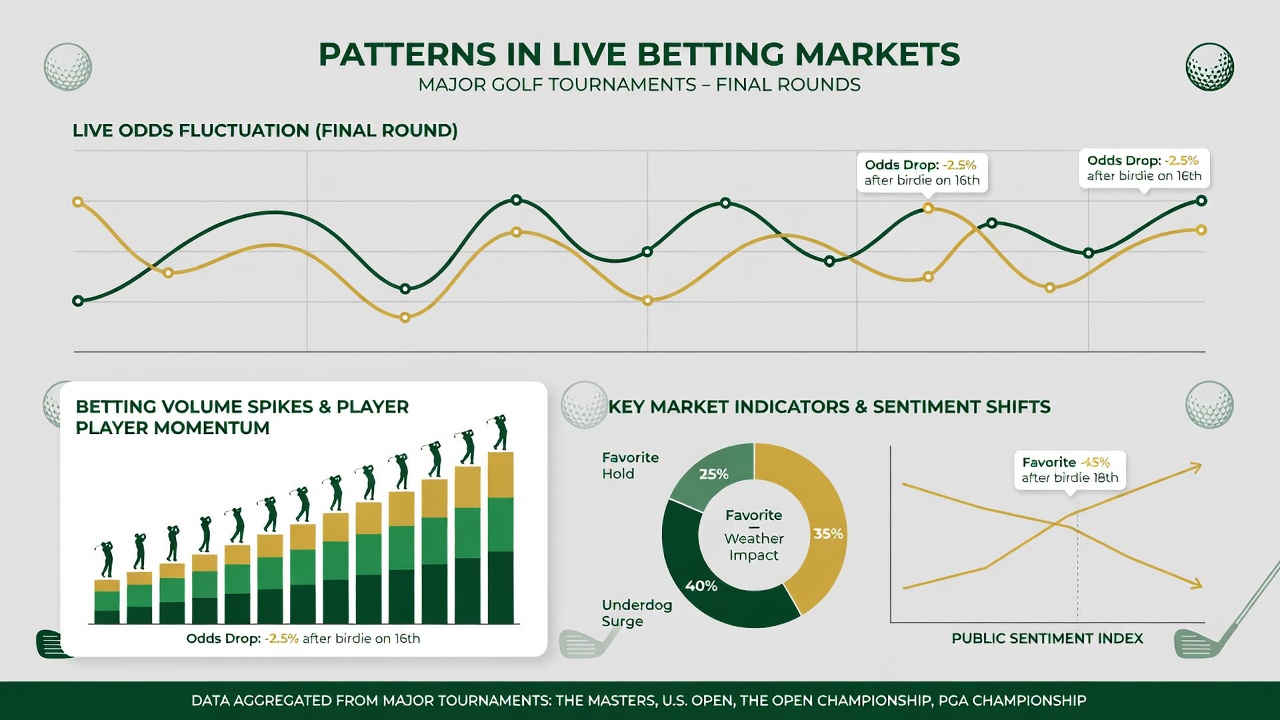
Between holes nine and thirteen the volume of live bets typically rises sharply according to aggregated platform data released by several European operators. This window coincides with the leaders reaching the back nine where wind and pin placements often create bigger scoring swings. When a player makes three birdies in four holes during this stretch their live odds compress by an average of 24 percent while those who drop shots see corresponding expansion.
Patterns also appear around specific course stretches. At Augusta National the stretch from holes eleven through thirteen produces the largest single-hole odds movements of any major because the combination of water and wind amplifies scoring variance. Similar clusters occur on the seventeenth at TPC Sawgrass during the Players Championship and the Road Hole at St Andrews.
Final Hour Volatility
The last four holes generate the highest volatility in live markets because remaining contenders have fewer opportunities to recover from mistakes. According to figures compiled by the European Tour's analytics partners outright winner odds for the final group can shift by more than 30 percent between the fifteenth green and the eighteenth tee. These movements reflect both actual scoring and the reduced sample size of holes left to play.
June 2026 will feature the US Open at Shinnecock Hills where historical data suggests the seventeenth and eighteenth holes produce the widest live odds spreads of any closing stretch on the major calendar. Operators already prepare additional liquidity for that window because past tournaments showed rapid price discovery once players entered the final two holes with leads of one or two strokes.
Weather and Course Condition Influences
Live markets incorporate weather updates faster than pre-tournament lines because rain or wind forecasts update in real time and directly affect scoring averages. When afternoon thunderstorms approach a course like Oakmont or Carnoustie operators report increased betting on players who have already completed their rounds while those still on the course see their odds lengthen until conditions stabilize.
Green speed changes measured by stimpmeter readings also feed into market adjustments. Faster greens during final rounds correlate with higher variance in putts made which in turn widens the range of possible outcomes reflected in live odds.
Conclusion
Live betting markets during major golf final rounds display consistent patterns tied to leaderboard position, hole location, weather shifts, and time remaining. These patterns emerge from the sequential nature of scoring and the immediate availability of results through broadcast coverage. As tournaments continue through 2026 observers expect the same structural responses to repeat whenever similar conditions arise on championship Sunday.