Atmospheric Conditions Reshaping Session Markets in Cross-Sport Accumulators
Written by Xander Sullivan · Jun 13, 2026
Atmospheric Conditions Reshaping Session Markets in Cross-Sport Accumulators
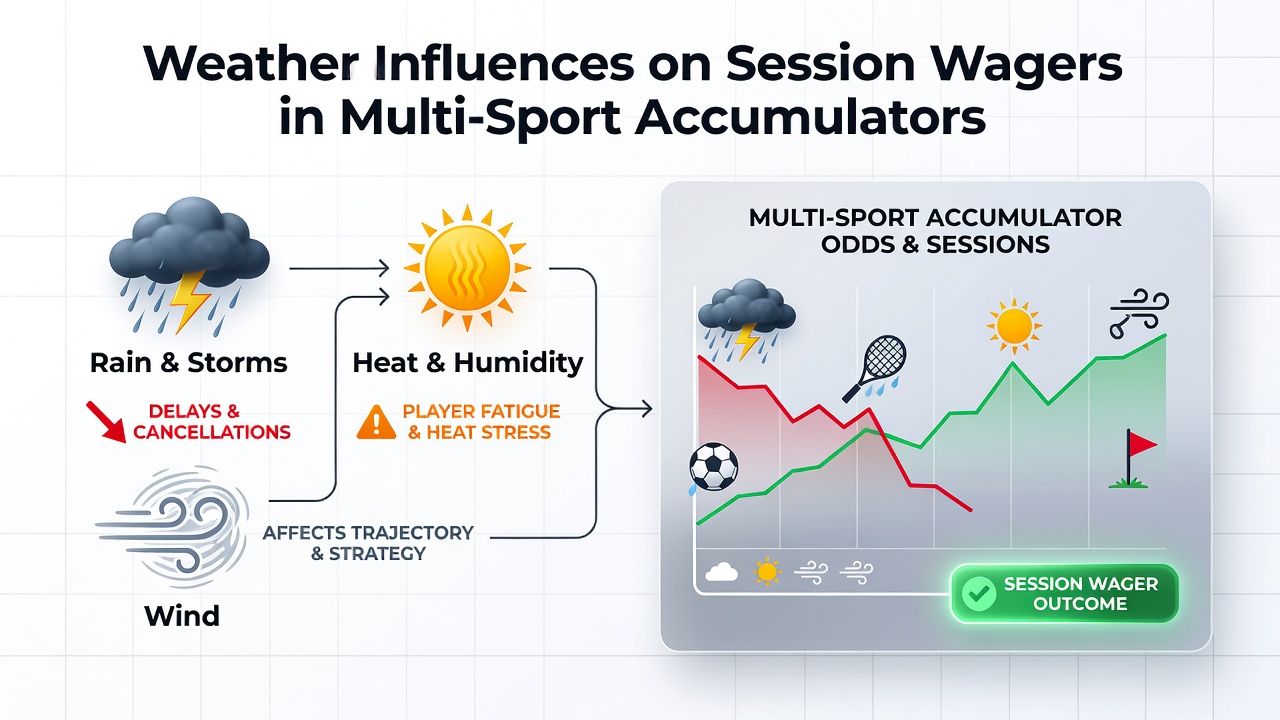
Session wagers focus on discrete periods within matches such as halves in football, sets in tennis, or quarters in basketball, and when these bets combine into multi-sport accumulators the influence of weather becomes measurable across different venues and times of year. Observers note that precipitation, temperature swings, and wind speeds alter player output statistics in ways that shift live odds for individual legs while the combined payout structure of accumulators magnifies small variances in probability.
Data from sports performance databases indicates that outdoor events experience the clearest effects because surface conditions and visibility change rapidly once conditions deteriorate. Cricket matches provide one consistent example where rain interruptions modify run-rate expectations during specific overs, directly impacting session totals on runs scored or wickets taken within a given period. Similar patterns appear in tennis when clay courts absorb moisture and slow ball speeds, which lengthens rallies and raises the likelihood of longer sets that favor certain statistical outcomes.
Football and Rugby Pitch Dynamics
Football and rugby grounds react to rainfall through changes in grass length and soil firmness, and these alterations affect passing accuracy and tackle success rates during defined match segments. Researchers tracking European leagues have recorded higher rates of set-piece goals when pitches soften, a trend that influences session bets on corners or cards awarded in the second half. Wind also plays a documented role in long-range attempts, with cross-field gusts recorded above 25 km/h correlating to reduced completion percentages on through balls in afternoon fixtures.
Accumulators that pair a football session wager with a later tennis set total therefore carry compounded exposure because weather forecasts for separate locations must align simultaneously. When forecasters predict thunderstorms for one venue and steady drizzle for another, operators adjust the combined odds to reflect the joint probability of both legs finishing within expected statistical bands.
Temperature Effects on Endurance Sports
Temperature extremes influence endurance-based events such as cycling stages or marathon sections within multi-sport products. Studies compiled by the Australian Institute of Sport show that ambient temperatures above 30 °C increase fatigue markers after 60 minutes of continuous effort, raising the chance that later-session performance metrics will deviate from seasonal averages. Cold conditions below 5 °C produce the opposite effect in winter sports, where muscle stiffness can reduce sprint speeds during opening quarters of rugby matches played in northern hemisphere winter schedules.
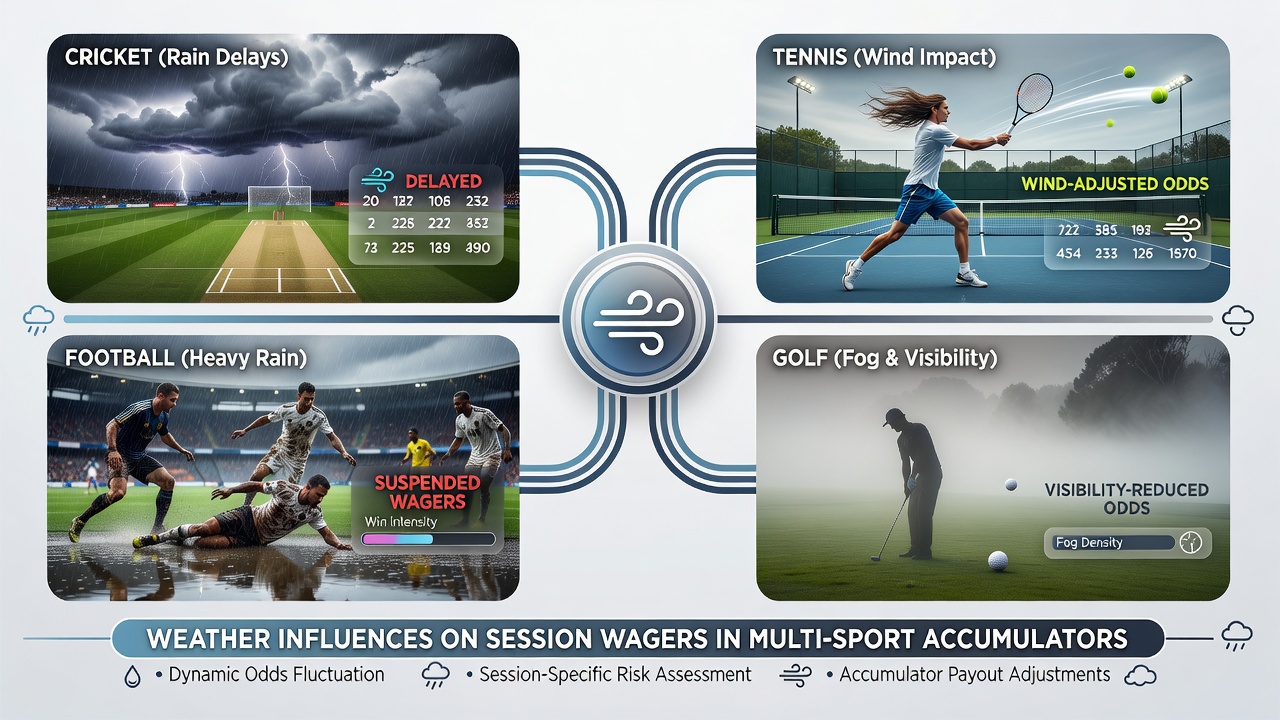
Operators incorporate real-time meteorological feeds into pricing engines so that session lines on total distance covered or shots attempted update automatically once temperature or humidity readings cross predefined thresholds. This automation allows accumulators to remain live while individual legs adjust independently according to on-site conditions rather than relying solely on pre-match models.
June 2026 Scheduling Considerations
June 2026 features overlapping international tournaments including teh opening matches of the FIFA World Cup hosted across North America, and these fixtures occur during periods when regional weather patterns shift from late spring into early summer. Data collected by Environment Canada indicates that afternoon thunderstorms become more frequent in the Great Lakes region during this transition, creating short but intense windows where visibility drops and pitch traction changes. Such interruptions have historically altered the distribution of goals scored in opening versus closing periods, directly feeding into session-based accumulator legs.
Similar patterns appear in the southern hemisphere where June marks the start of winter, and indoor versus outdoor venue distinctions matter more when cold fronts arrive. Accumulators that include both a World Cup session total and a Super Rugby match played in New Zealand therefore require bettors to monitor two distinct climate zones simultaneously.
Data Integration and Risk Distribution
Industry reports from the European Gaming and Betting Association demonstrate that operators now integrate satellite imagery and ground sensor networks into risk models for multi-sport products. These systems flag when wind speeds or precipitation probabilities exceed historical norms for a given stadium, prompting automatic line movements on session markets. The result is that accumulator builders encounter wider spreads on legs involving exposed venues while indoor basketball or volleyball sessions remain comparatively stable.
One documented case from the 2024 European summer showed that a sudden temperature drop during an evening football fixture coincided with a measurable increase in stoppage-time goals, an outcome that retroactively validated session bets placed on late-period totals. Observers tracking similar events note that such occurrences become more frequent when tournament schedules compress multiple high-stakes matches into narrow calendar windows.
Conclusion
Weather remains an observable variable that operators and data providers track through dedicated meteorological partnerships, and its effects on session wagers within multi-sport accumulators continue to appear in performance statistics across football, tennis, cricket, and endurance disciplines. As scheduling intensifies around events such as the 2026 World Cup, the interaction between atmospheric conditions and period-specific betting markets will likely stay central to pricing accuracy and risk management frameworks used by platforms worldwide.